Protect your home from water damage with our expert vacuum gutter cleaning service
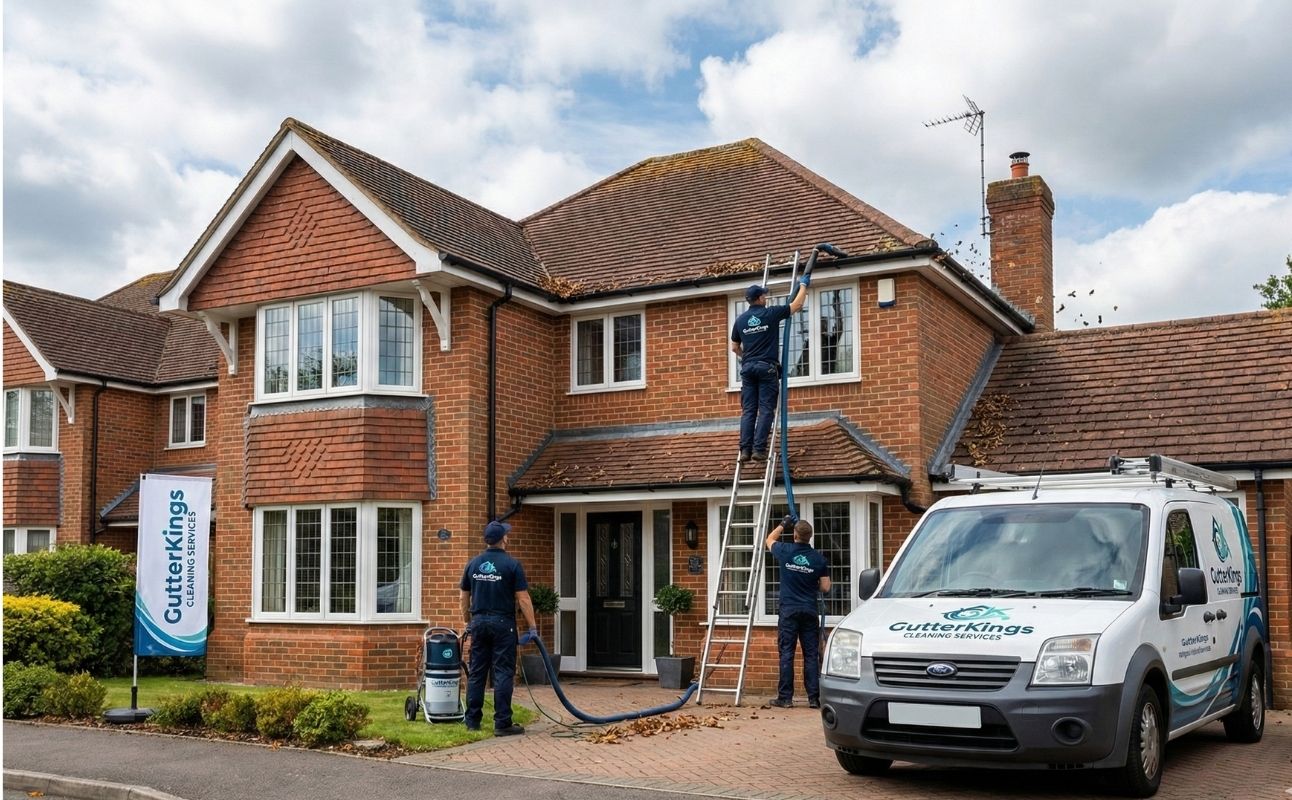
Blocked gutters can cause serious damage to your property - from damp walls and damaged fascias to flooded gardens and even foundation problems. Our professional gutter cleaning service removes all debris, ensuring your gutters flow freely and protect your home.
Using powerful vacuum systems, we can clean most gutters safely from the ground - no ladders against your walls, no risk of damage to your property.
Overflowing gutters cause water to run down walls, leading to damp and mould inside your home.
Standing water in gutters rots wooden fascias and damages uPVC, leading to expensive repairs.
Seeds in gutters grow into plants that block drainage and can damage your roof.
Regular cleaning prevents expensive repairs - it's much cheaper than fixing water damage.
Contact us with your address and we'll provide a free, no-obligation quote.
Choose a convenient time - we offer flexible scheduling including weekends.
Our team arrives, cleans all gutters and downpipes, and removes all debris.
You receive before & after photos showing the work completed.
Fair prices with no hidden fees - what we quote is what you pay
Gutter cleaning from
£65
Price depends on property size and access. Most 3-bed homes are £65-£85.
Get Your Free QuoteFor most homes, evidence suggests a practical baseline is one full gutter clean per year, usually in late autumn or early winter after the main leaf fall. Properties near tall trees, older roofs with regular moss shedding, or homes exposed to heavy wind-driven rain often benefit from two visits each year. A spring check plus an autumn clean is typically the most robust pattern for preventing repeat overflow.
A primary consideration is not only tree cover, but also roof condition and local microclimate. If you regularly see moss granules on patios, frequent debris in valleys, or repeated blockages in one run, annual cleaning may be insufficient. In those cases, an additional maintenance visit is usually cheaper than repeated callouts for emergency clearing and minor repairs.
Each visit is structured to restore flow and reduce the likelihood of immediate recurrence. We remove visible debris, check outlet performance, and verify that water can move through downpipes correctly. Where we see emerging faults, such as movement in brackets or persistent leakage at a joint, we flag these early so you can resolve them before they become larger repair jobs.
The most reliable cleaning cadence depends on how quickly debris can accumulate and how vulnerable the building fabric is if overflow occurs. A detached home with mature trees nearby often sees faster gutter loading than a modern terrace in an open street, while bungalows and extensions can collect debris in valley transitions where runoff changes direction. The resulting tension is between minimising annual spend and avoiding hidden damage costs from saturated walls, fascia deterioration, and repeated damp patches around openings.
A practical framework is to base timing on observed risk rather than a fixed calendar alone. If your property regularly shows water sheeting over one corner in heavy rain, that location should be treated as a priority inspection point even if the rest of the run appears clear. Likewise, if you have had roof moss treatment, the following six to twelve months usually include elevated debris migration, so an interim maintenance check often prevents fresh outlet restrictions.
For landlords and multi-property owners, planned gutter cleaning also improves maintenance predictability. Scheduled visits create a consistent evidence trail and reduce the probability of reactive emergency jobs during peak weather. Evidence suggests this approach is usually more cost-efficient over a full year, especially on properties where access constraints make urgent callouts inherently more expensive.
Another non-trivial benefit of planned cleaning is improved decision quality when defects do appear. When gutters are maintained at sensible intervals, leaks and movement faults are easier to diagnose because they are not masked by heavy debris load. This means any recommendation for repairs is based on genuine component condition rather than temporary blockage effects, helping homeowners avoid both unnecessary replacement and false reassurance from short-lived fixes.
Where previous overflow has affected brickwork or pathways, early planned cleaning can also reduce cosmetic and surface-wear issues that are costly to reverse. Maintaining consistent flow at roofline level is often the simplest preventive control available to protect both drainage performance and visible external condition.
Seasonal booking works best when tied to local conditions rather than broad rules. In much of the Midlands, late autumn is high value for primary cleaning, while late spring checks can be beneficial on tree-dense roads or older roof systems with persistent moss shedding.
Where issues are linked to one elevation, combining cleaning with targeted gutter repairs can improve long-term reliability. If discharge remains slow after cleaning, dedicated downpipe unblocking is usually the next non-trivial step.
Use the local child pages below for town-focused details, availability context, and service notes while keeping the same core process and quality standard.
Most standard homes can be completed within one to two hours, depending on debris volume, access, and the number of runs and outlets. Larger properties or heavily compacted gutters may take longer.
Yes. Access strategy depends on layout and safety. In many cases, ground-based vacuum systems make this straightforward, while more complex rooflines may require adjusted access methods.
Not always. Many customers are out during the work, provided access is arranged in advance. We still confirm scope, provide updates, and share evidence after completion.
Cleaning solves debris-related restrictions, which are the most common cause. If overflow is caused by pitch problems, damaged sections, or poor outlet design, we will explain the required repair path.
Yes, outlet flow is checked as part of service. Where a downpipe has a deeper obstruction, we can pair or follow up with dedicated downpipe unblocking.
Autumn is a common high-value window because leaf fall peaks, but timing should match your property risk profile. Tree-heavy plots often benefit from spring and autumn appointments.
We can advise a sensible interval based on your home and surrounding trees so you can shift from reactive callouts to planned, lower-risk maintenance.
Book promptly if you see overflowing edges in rain, streaking on walls, sagging sections, or vegetation growth in gutters. Early intervention reduces the chance of damp and fascia damage.
Get a free, no-obligation quote today. We'll get back to you within 24 hours.
Local coverage includes:
Town-specific service pages: