Remove moss, algae and lichen - restore your roof's appearance and protect your tiles
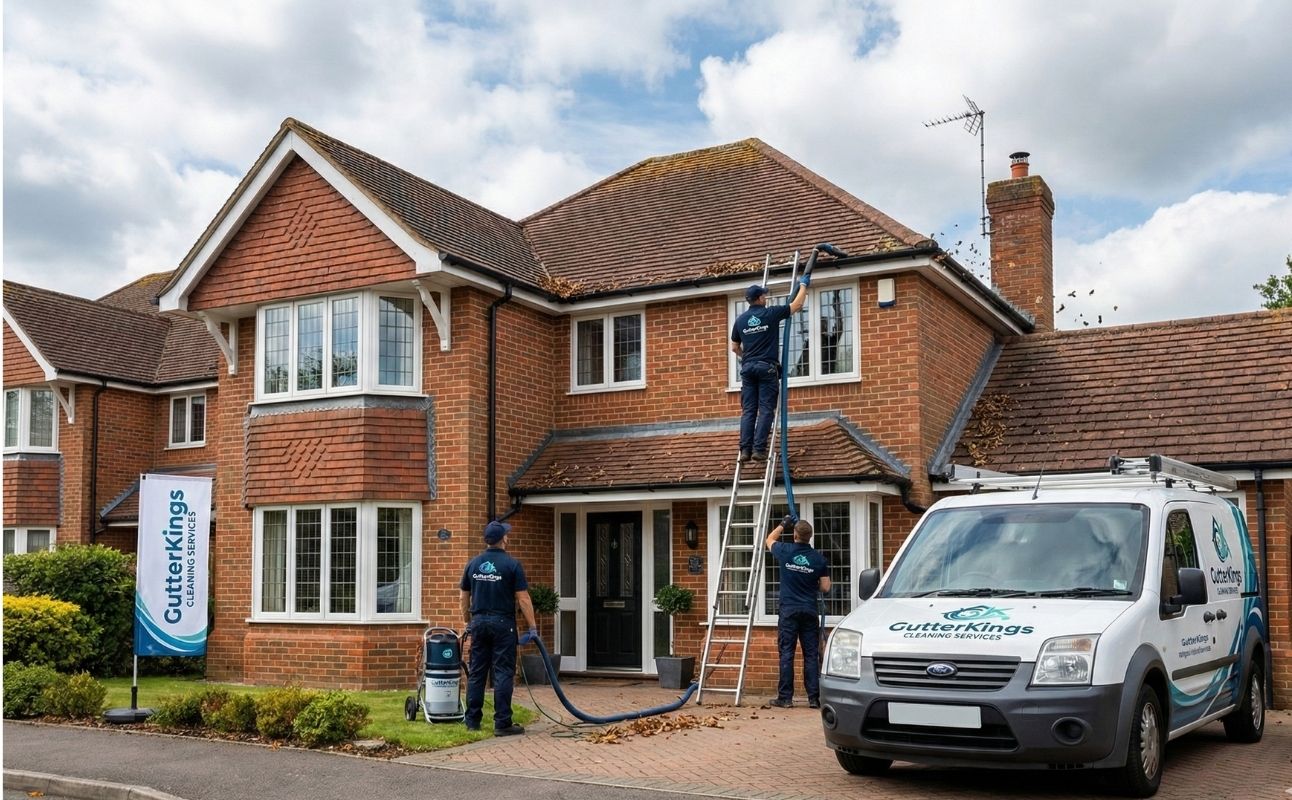
Moss, algae and lichen don't just look unsightly - they can actually damage your roof tiles over time. Moss holds moisture against tiles, causing them to crack in frost. Lichen roots can penetrate tile surfaces, weakening them.
Our professional roof cleaning service safely removes all organic growth and applies protective treatments to keep your roof looking great and lasting longer.
Our preferred method uses low-pressure application of specialist cleaning solutions that kill moss and algae at the root, without damaging your tiles.
After cleaning, we apply a professional biocide treatment that continues working for months, preventing regrowth and keeping your roof cleaner for longer.
Many companies use high-pressure jet washing on roofs - this is quick but can cause serious damage. High pressure can strip the protective surface from tiles, dislodge pointing, and force water under tiles causing leaks.
Our soft wash method takes longer but is much safer for your roof. We clean effectively without causing damage, and the biocide treatment means results last longer too.
Fair prices with no hidden fees - what we quote is what you pay
Roof cleaning from
£350
Price depends on roof size, pitch, and access. Includes biocide treatment and gutter clearance.
Get Your Free QuoteThe key tension with roof contamination is that visual decline and functional risk do not always move at the same speed. Some homes look heavily mossed but still shed water reasonably well, while other roofs with moderate growth already have recurring drainage issues around valleys and gutters. In practice, waiting until visible deterioration is severe can increase both cleaning complexity and downstream repair risk.
You usually benefit from booking roof cleaning sooner when moss is accumulating at tile laps, when dark algae is spreading across north-facing slopes, or when granular debris keeps appearing in gutter runs after rain. These indicators suggest active biological growth rather than isolated staining. Addressing this stage early is typically cheaper than allowing dense moss beds to retain moisture through repeated freeze-thaw cycles.
Another non-trivial trigger is repeated blockage of gutters shortly after clearance. If roof debris is continuously reloading outlets, treating gutters alone becomes a short-term fix. Evidence suggests pairing roof cleaning with planned gutter maintenance creates a more stable drainage system and reduces emergency callout frequency in winter.
Properties with mixed roof pitches and multiple valleys should be monitored especially carefully because debris migration is often uneven. Cleaning these roofs proactively tends to reduce concentrated loading at outlet-adjacent sections where overflow risk is usually highest during sudden downpours.
If your roofline also shows loose joints or persistent leaks, combining with gutter repairs can resolve the wider water-management problem in one coordinated maintenance window.
Roof cleaning is most effective when framed as a lifecycle intervention rather than a one-off cosmetic wash. The service removes active contamination, improves runoff behaviour, and reduces loading into guttering. The biocide phase continues working after the visit, so visual improvement can continue over subsequent weathering cycles as residual organic staining breaks down.
A practical consideration is that results vary with roof age, tile porosity, and local tree pressure. While most properties achieve a substantial visual reset, older roofs may retain minor historic staining. We set expectations clearly so decisions are based on long-term value, not unrealistic “instant new roof” claims.
Where roofs have complex geometry or mixed-age tiles, we also discuss phased treatment options. This can be useful when homeowners want to prioritise the most affected elevations first while planning the remainder around budget and seasonality. A staged approach still protects performance provided critical runoff and contamination hotspots are addressed early.
Our process starts with a site and roofline review to map contamination severity, access constraints, and any pre-existing vulnerabilities. This step matters because the wrong method choice is a common source of avoidable tile damage. We then complete cleaning in controlled stages so loosened material is managed rather than pushed into outlets or onto sensitive surfaces.
After cleaning, we apply a suitable biocide and verify drainage behaviour at gutters and downpipes. Where we identify defects unrelated to biological growth, such as movement at joints or failed supports, we provide a straightforward recommendation path so you can decide whether to complete follow-on works immediately or stage them over time.
Where properties are high-debris, we often advise scheduled gutter cleaning after peak leaf fall to preserve the benefit of roof treatment.
Roof cleaning is easy to oversimplify, yet method choice, chemical handling, and drainage follow-through all influence whether results persist. Our approach prioritises risk-aware cleaning that protects tile condition while reducing future maintenance pressure. We focus on clear scope, transparent advice, and realistic outcomes rather than one-size-fits-all sales language.
As a local operator, we also understand recurring regional patterns such as tree-driven debris in suburban streets and moss migration from older roof stock. This local context helps us recommend practical intervals and service combinations that fit real property conditions across Leicester and nearby towns.
Most properties benefit from a multi-year cycle, but timing depends on tree cover, roof orientation, and moss pressure. High-debris properties may need more frequent attention.
When correctly specified, soft washing is widely considered safer than high-pressure washing because it cleans without aggressively stripping tile surfaces.
It can significantly reduce debris loading, especially where moss shedding is the root cause. Pairing with routine gutter maintenance gives the best long-term outcome.
Yes, subject to weather, safety, and surface conditions. Timing is planned to ensure method effectiveness and safe access.
Performance varies by environment, but many roofs retain improved resistance for 12–24 months before notable regrowth pressure returns.
Yes, with method selection based on material condition and contamination type.
Cleaning removes contamination but does not repair structural defects. If leakage is present, we advise targeted repair actions.
Not always. If access is arranged and scope confirmed, work can often proceed while you are out, with updates provided afterwards.
Get a free, no-obligation quote today. We'll get back to you within 24 hours.
Local coverage includes:
Town-specific service pages: